Visual Development
The ontological bleed project was initially developed in 2023 when I was applying to masters programs. It was always developed to be a database interface of an archive with physical artifacts, with NPCs who had previously fallen victim to whatever supernatural threat the archive gave evidence of.
This initial impulse came from brainstorming how I would like to spend two years of my life, and what I would like to learn to do using the resources made available to me by attending an institution. I came to: I want to tell stories. I want to fabricate objects in diverse physical media. I want to visit archives and collections and see their secret backrooms. I want to work with narrative mechanics and fragmentary narrative.
The research creation aspect of this has not evolved enormously from this basic conceit.
In it's initial state, the concept was to discuss narrative "distancing" of different media. For example - how "realistic" does a fictional world feel when you have physical evidence? What media
Archive Research
In person Archives
I got the opportunity to visit two archives over the summer.
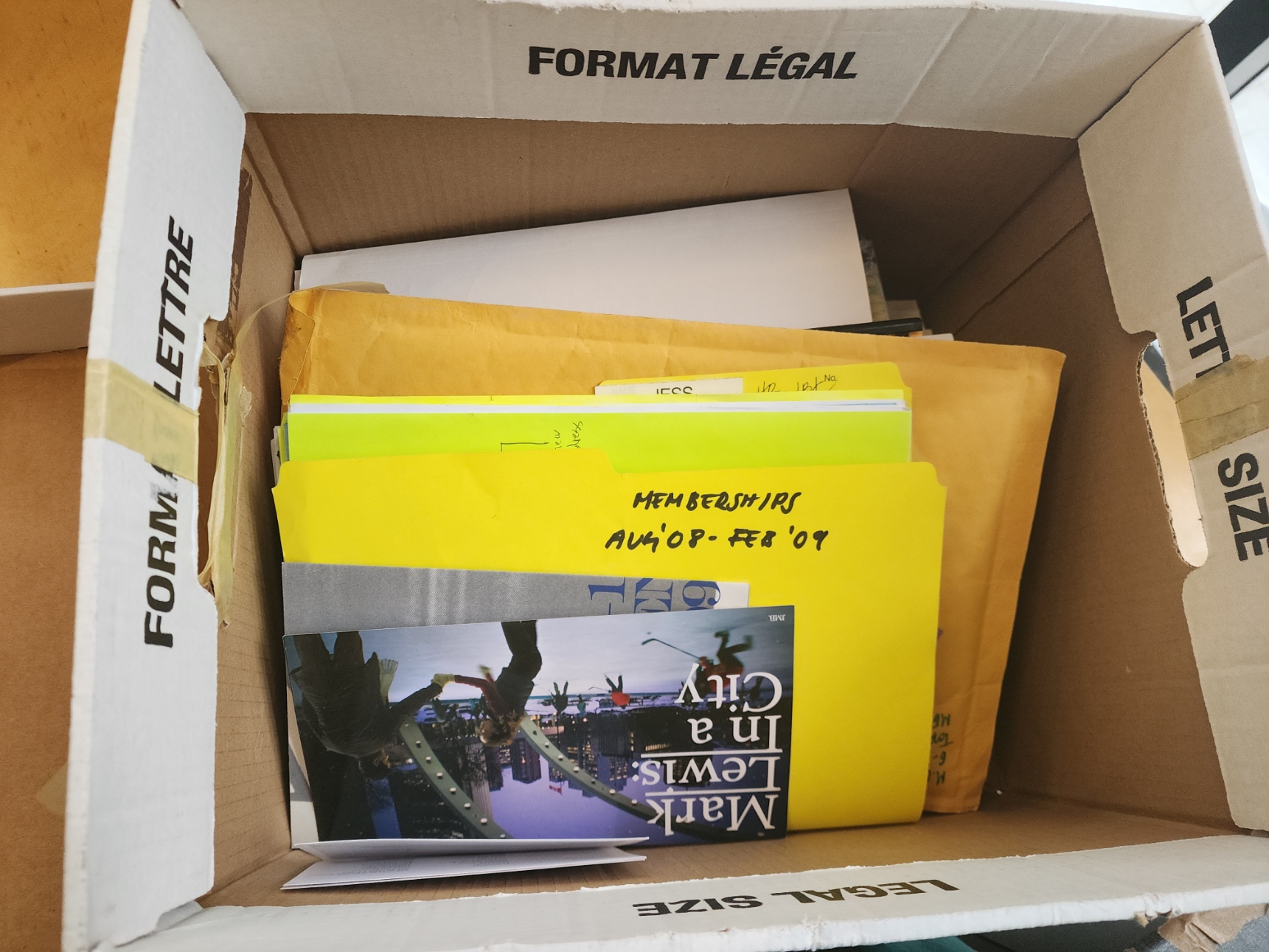
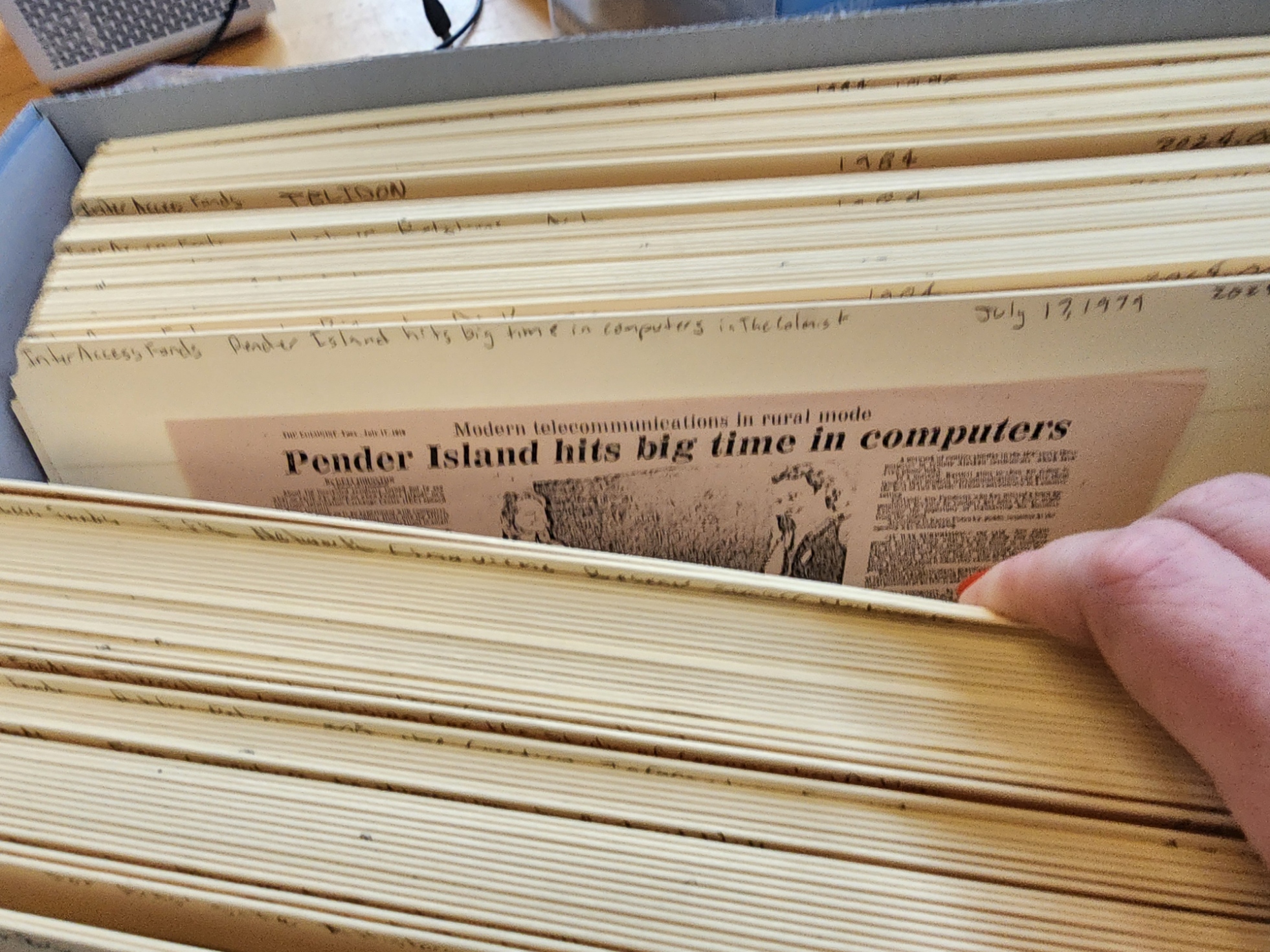
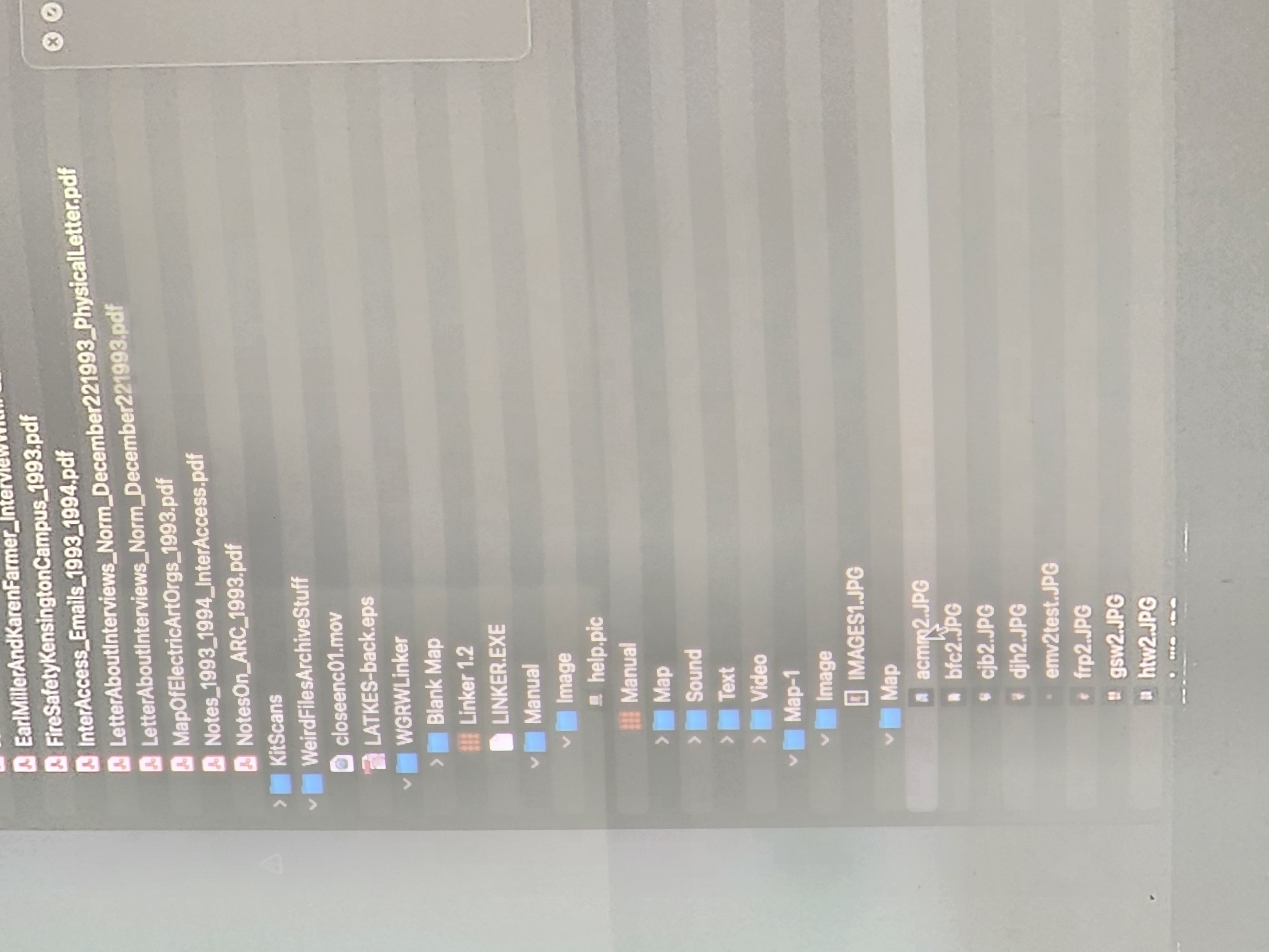
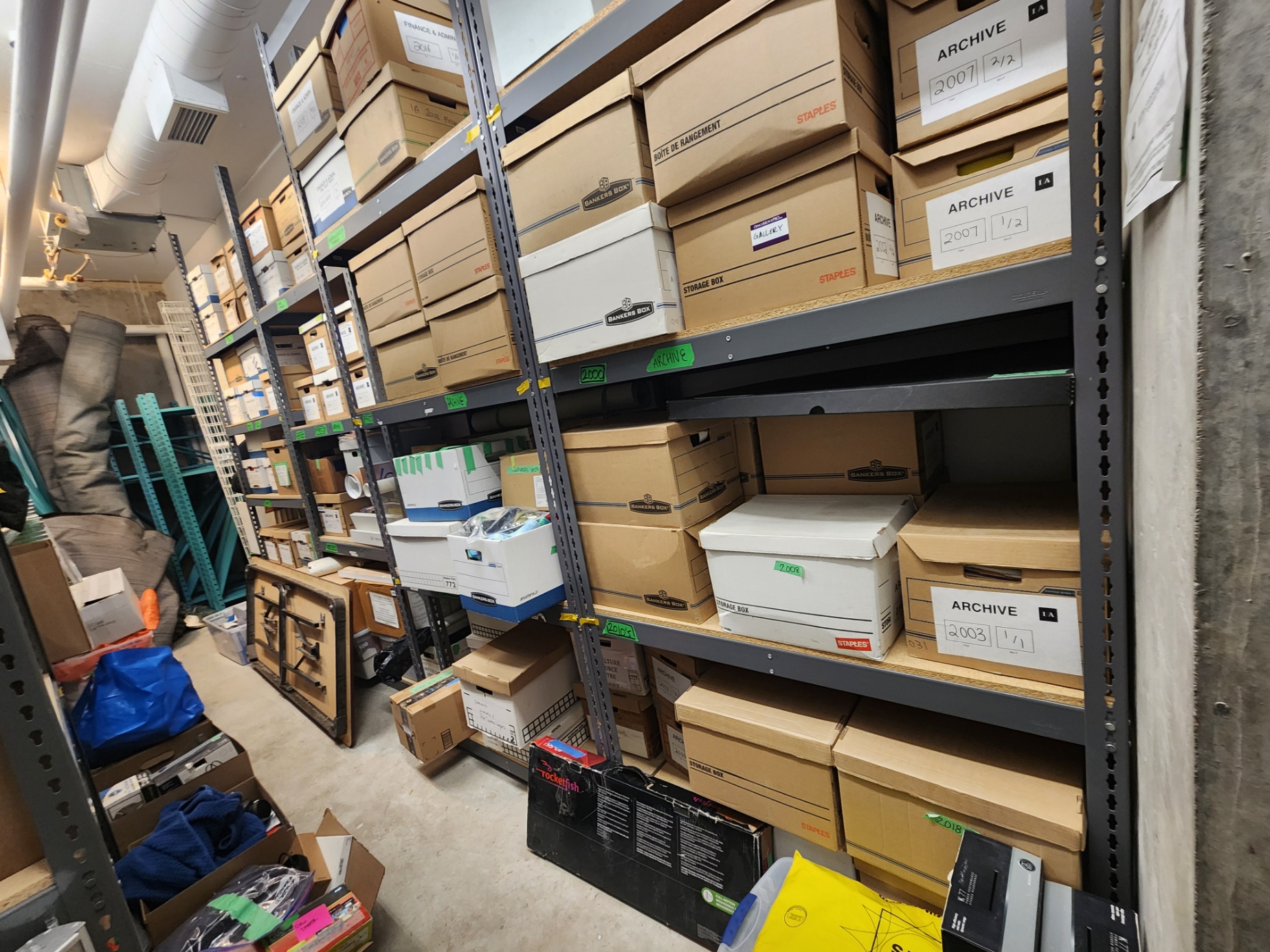
I attended a talk by Kit Haehnel in March 2025 at Interacess. Kit's talk discussed archiving as an act of creation, curation and destruction, heavily informed by Derrida’s Archive Fever (1996.) Kit had been working to organize the Interaccess archives - transforming them from cardboard boxes of haphazard documents and hard drives of poorly labelled documents and obsolete file formats to something neat and indexed.
This transition period is very wonderful. Interacess has moved several times over their decades long history, and their archive has lost items and absorbed other archives over time, indicating an ebb and flow of a specific slice of local culture and technological development over several decades.
The most interesting thing was watching the human beings documented by the archive in meeting notes and correspondence interact with each other, and how the decisions they made at the time shaped the direction of the organization, one offhand comment or general meeting vote at a time. As a tech interest organization, the technological evolution is documented not only by the software and hardware they may be discussing and celebrating, but by the very media the people cherishing it use to communicate with each other.
I also visited the OCADU Archive[@bognarOCADUUniversityArchives2025] - Madeline Bognar, the archivist there walked me through their procedures and filing system, and showed me some of her favourite pieces in the archive. This archive was much better funded and had much more space to spread out. Disappointingly, they also track their archive in a spreadsheet, but Madeline showed me their public collections on jstor. The archive made evident the evolutions in both artistic styles and archive technologies and practices - much like Interaccess, an archive exists in a constant state of attempting to reformat itself to existing expectations. It is shaped and molded by the people who care for it, and the researchers who access it, as they pull what has sunk to the bottom up to the top and recontextualize connections between artifacts through their own lenses.

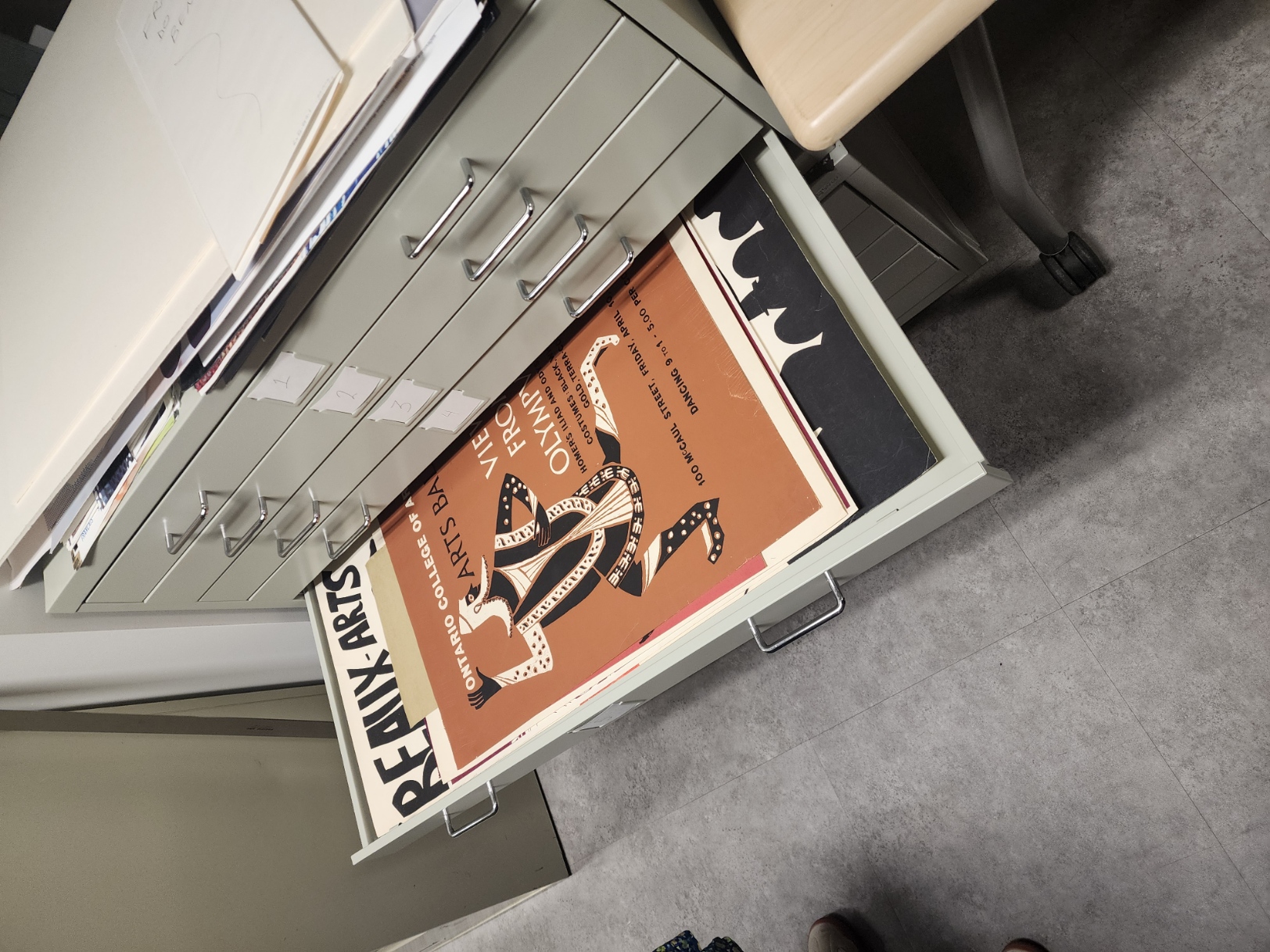
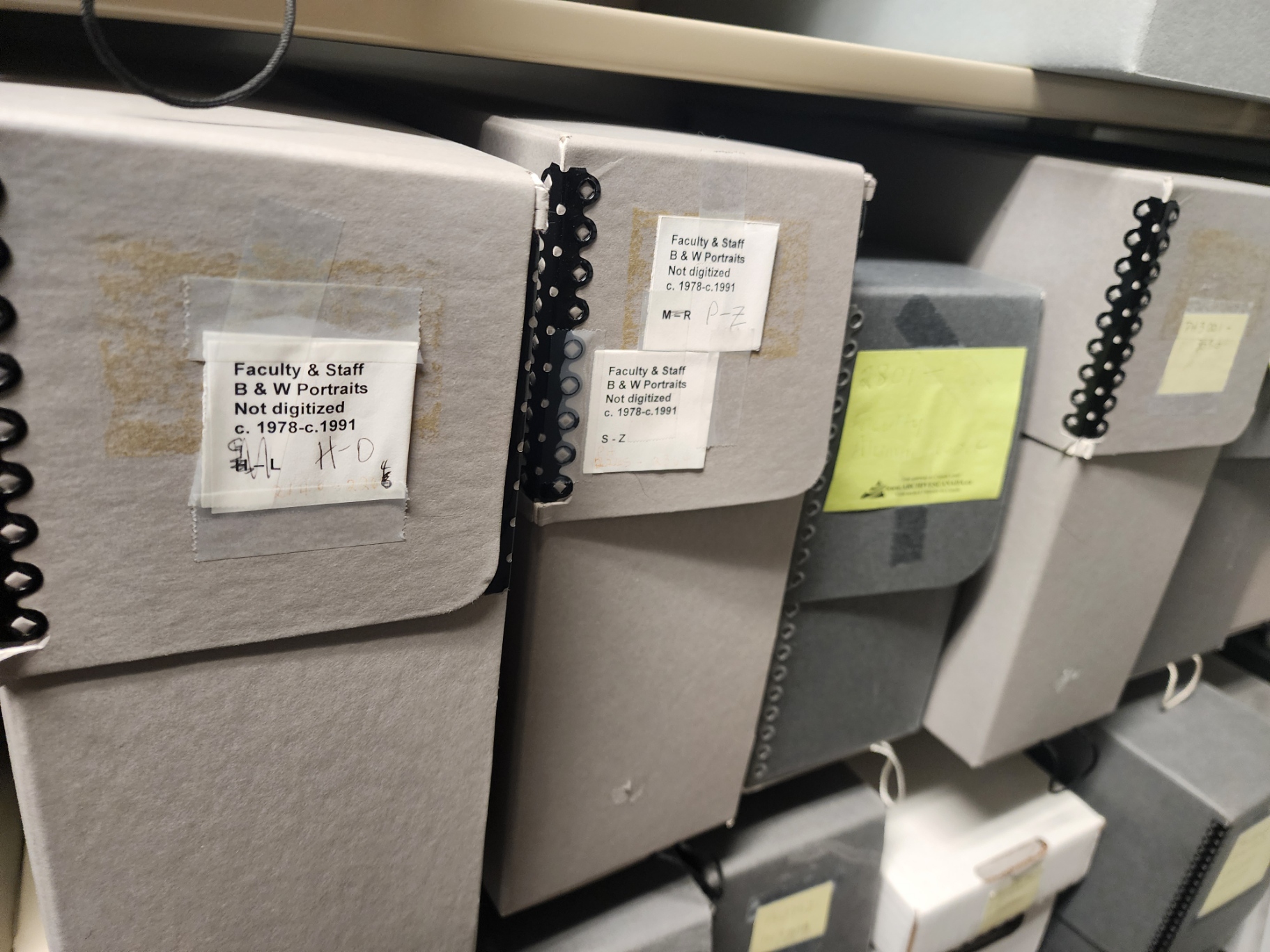

I attended a lecture by Reaghan Swanson, the archivist of the The ArQuives: Canada’s LGBTQ+ Archives
[@swansonCreatingYourArchive2025]. This was an practical lecture targeted at artists to provide them their own tools to begin mindfully archiving their own work, with the intention of making it preserving it's metadata for their own career development before earlier details are eroded from memory, and to have their legacy archived in the event it needs to be accessed after their passing, such as in the event it is donated to an archive such at the ArQuives.
The practical considerations of building an archive from scratch was of course very helpful for my project. Raegans talk reverified the role of an archive in shaping the narrative history of a community, this one with very high stakes - the archive was started at a time when queer histories were being lost and even intentionally buried, and queer communities were driven by wanting to take agency over their own stories. It again asks the continual archival question of what has the value to keep in a place where space is limited and sometimes the idea of truth is questioned.
I was invited to attend a meeting of researchers and archivists at the Special Collections Interest Group[@buehlman-barbeauSpecialCollectionsInterest2025] , organized by Savanna Buehlman-Barbeau an archaeologist at the University of Toronto. The discussion topic was on the value of museums, and the private organizational concerns verses the public responsibility, and the sometimes irresponsible stories a museum may knowingly or unknowingly tell the public through their curation. The discussion with researchers who are employed of a variety of organizations tasks with preserving history, and who's research takes them through many different archives, was a really invaluable perspective. It is the people who decide what is kept and what is lost to history, and what is displayed to the public and what is buried deep in storage.
The materiality of an archive is something that has surfaced in my research again and again. The further back an archive goes, the more it erodes, and each material in its storage have different shelf lives. The space available to preserve these things and the very human priorities of the those responsible for their care is constantly in flux - at the mercy of money, interpersonal politics, and even the weather. A digital file can be shared farther than a physical artifact, but it fact it's lifespan is laughable compare to a single sheet of paper.
My essential take away from this research is the impact of materiality and human intention of the shape and the value of an archive.
I am still hoping to visit more archives if I can. I always want to visit the Rare Book Library and see some of the older things in their collection.
Online Archives
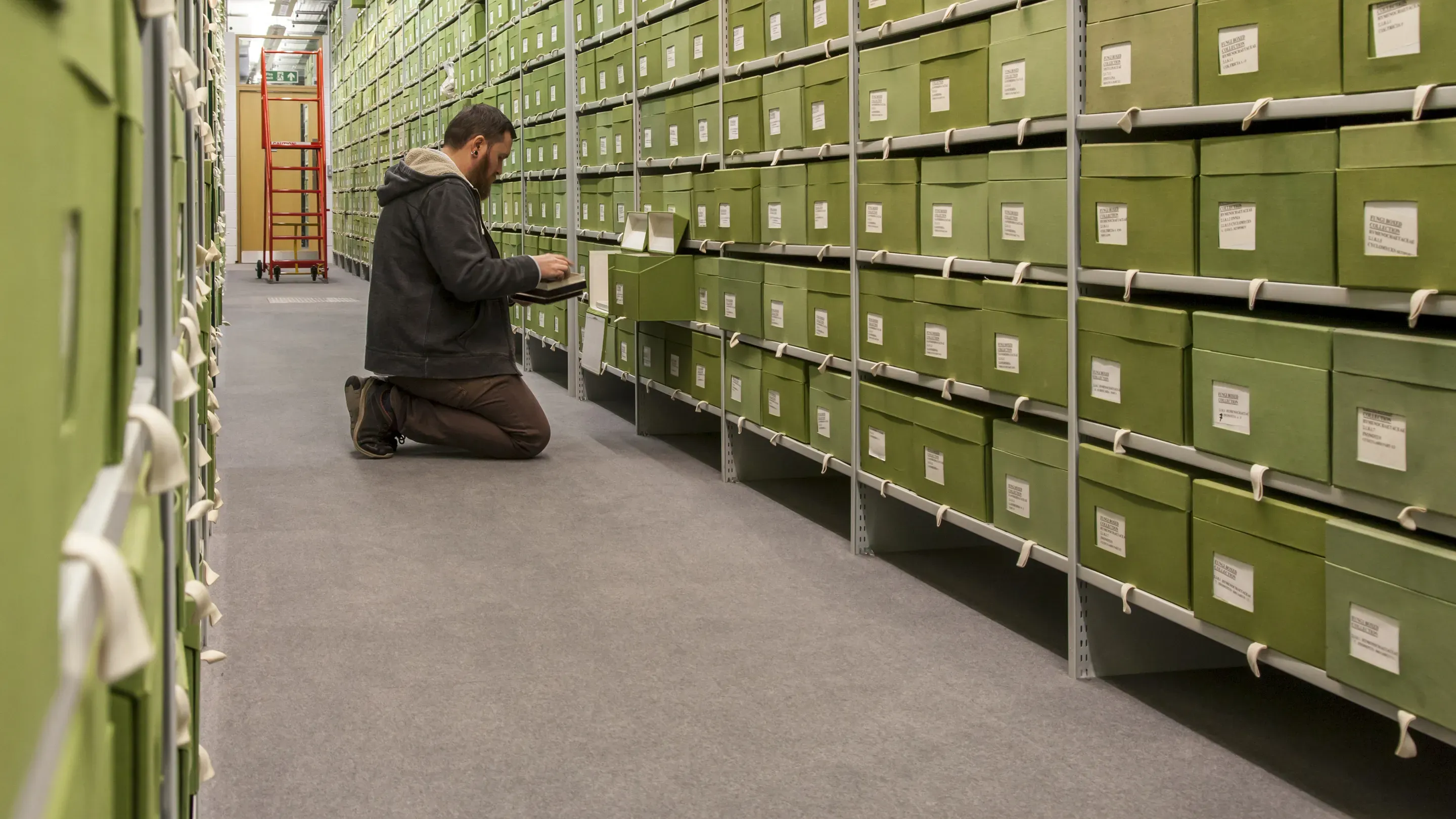
I'm also looking through online archives. A friend of mine found this Fungarium at the Kew Botanical gardens, they have a very charming video of how they archive is built and a bit about how it's evolved that I find very inspiring.
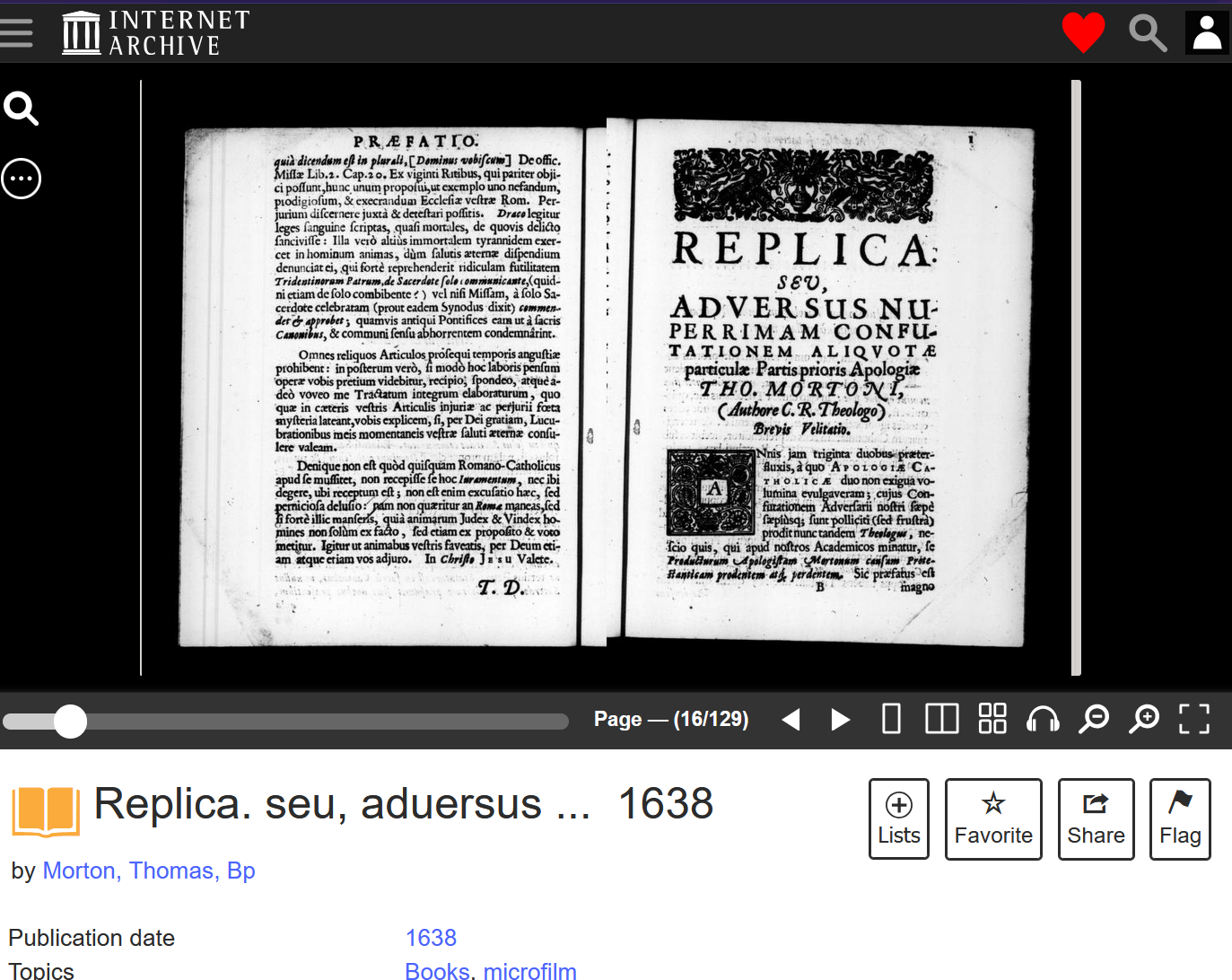
I am also having fun looking through the English Short Title Cataloge at the Internet Archive.
Visual Development
I'm pretty disappointed that modern archives look nearly entirely like this. I find this content very lovely, but the layout of the page is even uglier than the databases I am so attached to.
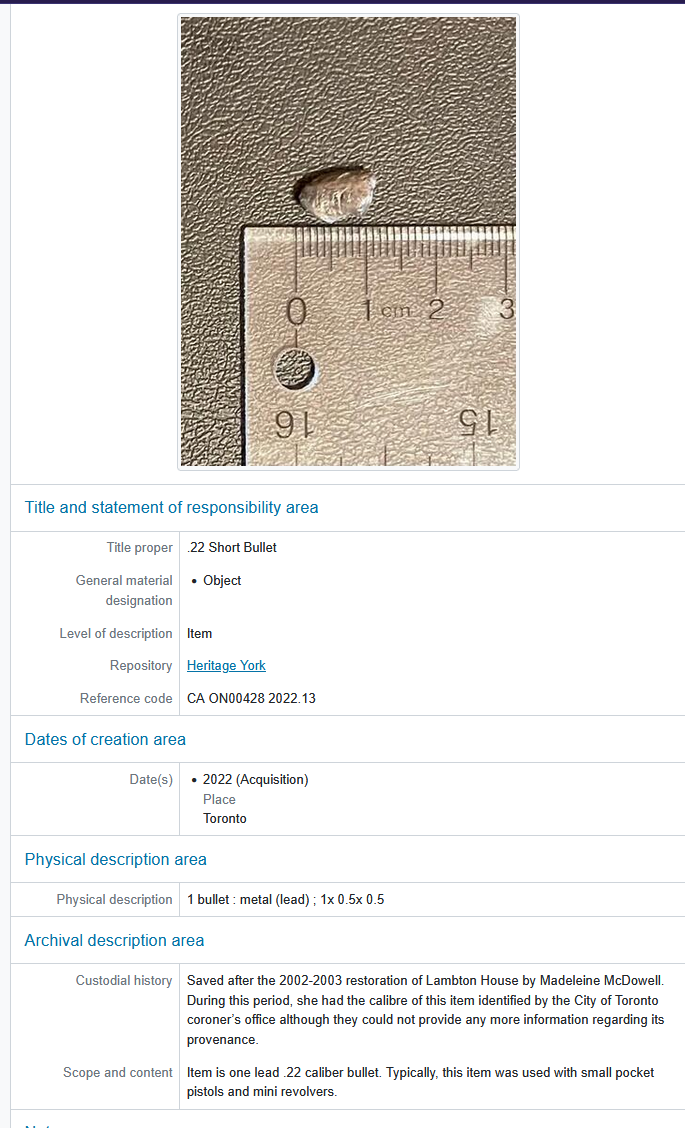
Short bullet from Information object browse - Archeion
I was imagining something more like what I used at work - but it seems those databases were 10+ years out of date. My database was editable - I can't have that for my project. I will need to invent my own that works as I need it to.
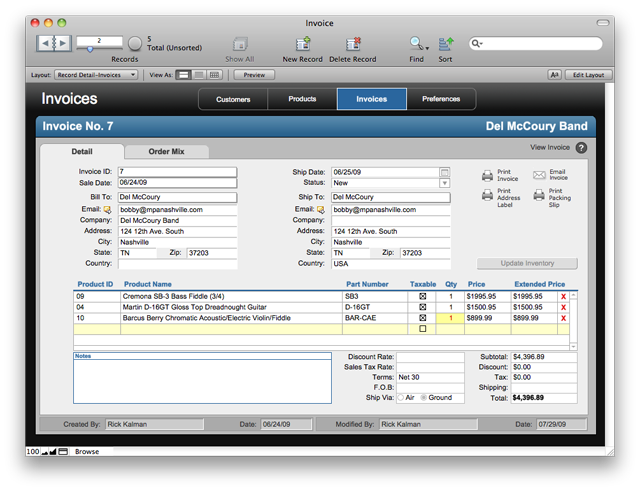
Secondary Database
I intend to also create a secondary database - something very simple, that the player needs to reference to unlock new entries. I'm providing these as "hashcodes"
I am looking to create something like a terminal prompt for this - making it very difficult to browse - search only.
I found some references in the Abandonware Databases archive. I'm a big fan of this one:
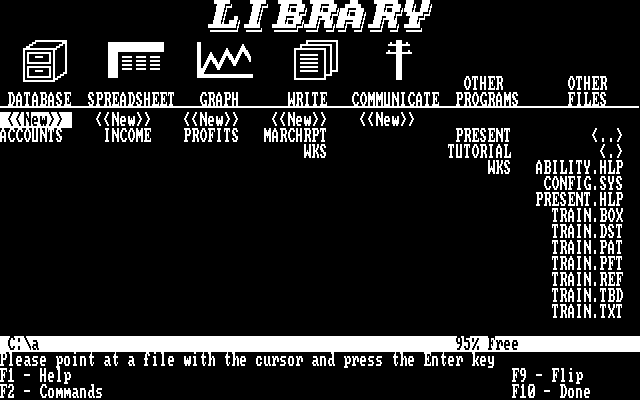
I intended to work with this Gaiman terminal-inspired game engine to create this database, but currently I think it will be significantly easier to adapt the codebase of the current database and style it to look more like a terminal. I am hoping to build it in the same repository, there seems to be a way to launch two electron windows simultaneously though I have not succeeded at this yet.

Current Database Progress
You can see my development on the archive throughout the summer here and here.

I'm still really struggling with React. I am constantly tempted to reformat the entire thing into vanilla JS so I don't have to jump through so many Typescript hoops. I'm technically scripting myself, but I'm asking Copilot, the coding software built in AI helper, what things mean and how to translate normal C# or Javascript into Typescript/React. It's helpful, but also wrong half the time, and if I'm not careful it will edit my code and I have to hunt down what it's done. (There must be a way to turn this off. I just want a search engine.)
Current Fiction & Artifact Progress
Currently, there is no progress. I've collected a few odds and ends, but I don't know how or if they will fit together.
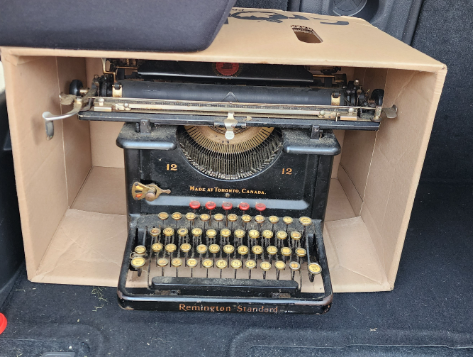
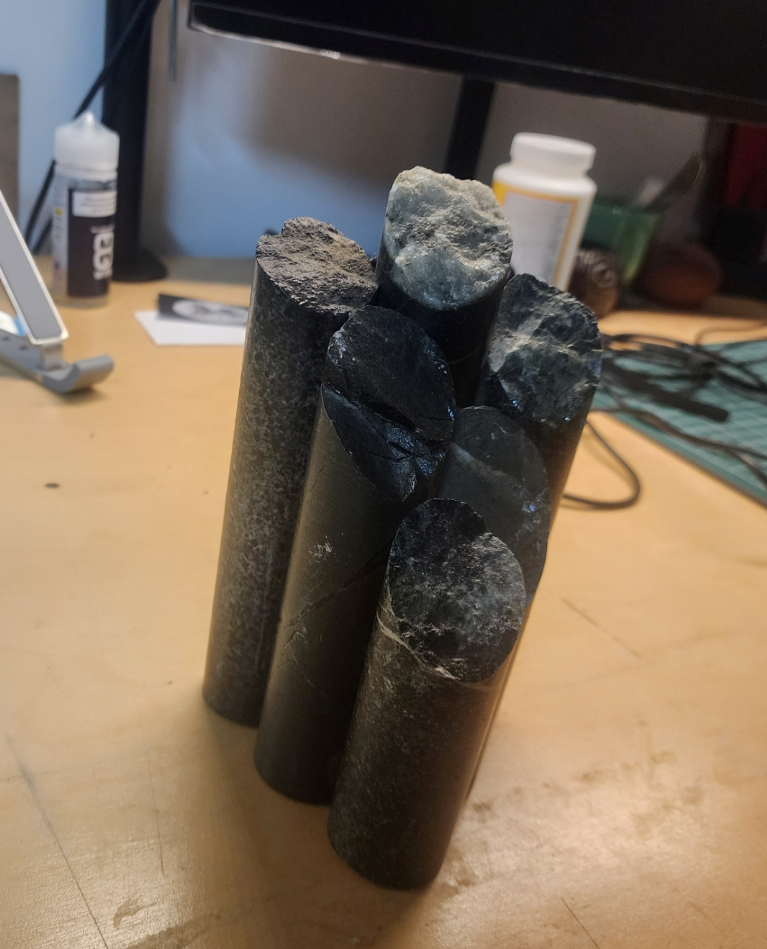
I made a small randomization game to try to brainstorm entires, but I think I am already starting with too many moving pieces and it's over complicated. I intend to sit down and write one small story -just one artifact, one conversation between two people, instead of building an entire world at once. I just need to figure out how to find the heart in it, and not make it silly.
I have an independent study to focus on the fiction writing set up for this coming semester, but it hasn't started yet.